
Mount Kilimanjaro National Park
About Mount Kilimanjaro National Park
Mount Kilimanjaro is not just a mountain, it is an icon. Rising 5,895 meters above the East African plains, it is the highest free-standing mountain in the world and the roof of the African continent. To climb it is to walk through five different ecological zones in a single journey, from tropical rainforest and alpine meadows to the haunting lunar landscape of the summit crater.\n\nThe journey to Uhuru Peak is as much a mental challenge as it is a physical one. Each route—Marangu, Machame, Lemosho, and others—offers a unique perspective on the mountain's shifting majesty. You begin in the lush montane forest, home to elusive primates and birds, before emerging into the heather and moorland zones, where the giant groundsels stand like silent guardians against the thinning air.\n\nBut Kilimanjaro is not only for climbers. The surrounding national park offers spectacular day hikes and opportunities to witness the mountain's raw power from its base. The sight of Kibo's snow-capped peak glowing orange in the first light of dawn, while the plains below are still in shadow, is an experience that stays with every visitor forever. It is Africa's greatest landmark, a testament to the earth's ancient volcanic power.
Wildlife in Mount Kilimanjaro National Park
Species you may encounter on your safari
 Common
Colobus Monkey
Found in the dense montane forest zone at the base of the mountain.
 Common
Blue Monkey
Frequently seen playing in the canopy near the park gates.
 Very Common
Four-striped Mouse
A resilient inhabitant of the higher alpine moorland zones.
 Common
Malachite Sunbird
Often seen feeding on the nectar of giant lobelias in the moorland zone.
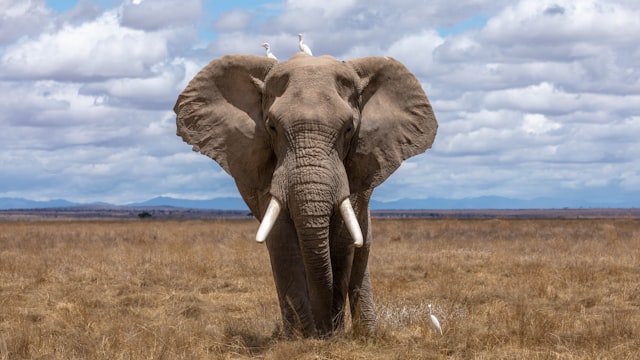 Rare
RareElephant
Occasional sightings in the lower forest zones, though they are very elusive here.
Best Time to Visit
January - March
June - September
October - December
Experience Mount Kilimanjaro National Park
Let us craft the perfect Mount Kilimanjaro National Park itinerary for you.