
The Great
Migration
1.5 million wildebeest. One ancient instinct. A 1,200-kilometer circular journey across the Serengeti — the greatest wildlife spectacle on Earth.
Nature's
greatest
performance.
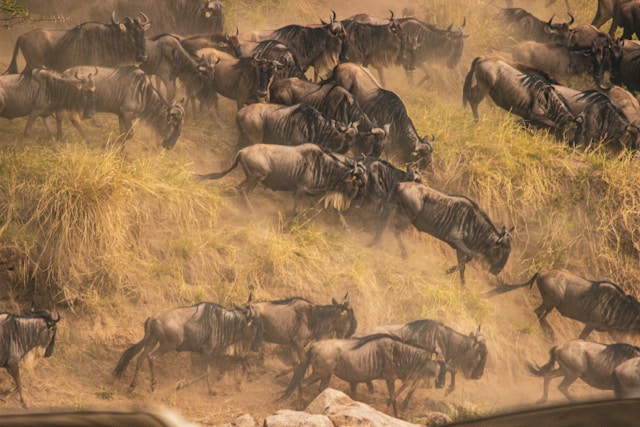
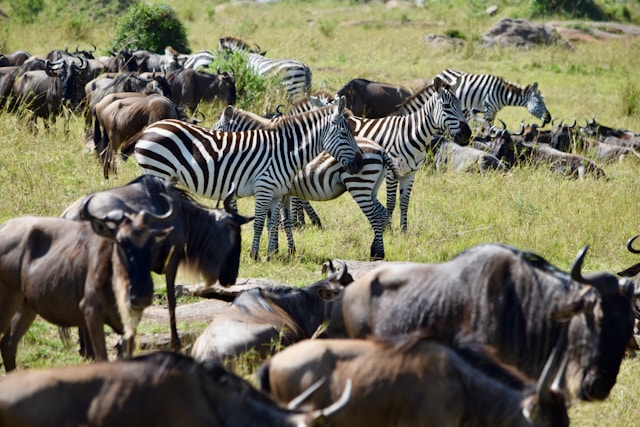
The Great Migration is the largest overland wildlife movement on the planet. Each year, over 1.5 million wildebeest, 400,000 zebra, and 200,000 Thomson's gazelle embark on a circular journey driven by the ancient rhythm of the rains.
This isn't just a migration — it's a life-or-death odyssey. Predators lurk at every turn. Rivers teem with crocodiles. Calves must learn to walk within minutes of birth.
1.5M+
Wildebeest
400K
Zebra
1,200km
Annual Circuit
2M+
Years of Instinct
How the story
unfolds.
Calving Season
Southern Serengeti & Ndutu
Over 500,000 calves are born in a three-week window on the short-grass plains. Lions, cheetahs, and hyenas patrol constantly. The open plains offer little cover — this is the circle of life in its rawest form.
The Northward Trek
Central & Western Serengeti
As the long rains deplete the southern plains, the herds begin their march north. They congregate around the Moru Kopjes before pushing into the western corridor — massive columns stretching for kilometers.
The Grumeti
crossings.
The first great obstacle. Nile crocodiles lie in wait as thousands of wildebeest mass on the banks before surging across the Grumeti River. It is chaos. It is survival. It is nature at its most unfiltered.
The Mara River
crossings.
The crescendo. A mile-wide river teeming with crocodiles. Thousands plunge in at once — chaotic, violent, breathtaking. This is what you came to see.
Book a Migration Safari→The Return South
The short rains arrive, and the herds begin their journey back south through the eastern woodlands of Lobo, completing the 1,200-kilometer circuit. As December approaches, the herds return to the southern Serengeti — ready to begin the cycle once more.
When to go.
Southern Serengeti
Calving begins
Southern Serengeti
Peak calving
Southern → Central
Moving north
Central Serengeti
Long rains
Moru Kopjes
Regrouping
Western Corridor
Grumeti approach
Grumeti River
River crossings
Northern Serengeti
Mara River
Northern Serengeti
Peak crossings
Northern → Lobo
Heading south
Eastern Serengeti
Short rains
Southern Serengeti
Cycle restarts
Before you go.
When is the best time to witness the migration?+
July through October for the dramatic river crossings in the north. December through March for calving season in the south. Every season offers a different perspective on this extraordinary event.
Are river crossings guaranteed?+
Nature doesn't follow a schedule. July through October offers the highest probability, but the herds follow ancient instincts that can shift by weeks. Our guides use real-time tracking and local knowledge to position you at the most active crossing points.
How many days do I need?+
We recommend a minimum of five to seven days. This gives enough time to track the herds across different sectors of the Serengeti, witness at least one crossing, and explore the diverse ecosystems.
Can families join?+
Yes. We design family-friendly migration safaris with private vehicles, flexible schedules, and age-appropriate activities. Children aged six and older are welcome on game drives.
Ready to follow
the herds?
Speak with a migration specialist or browse our Serengeti safari packages.